In the startup world, equity is one of the most powerful tools for attracting, motivating, and retaining top talent. But giving away equity upfront doesn’t make sense, especially when the company is still young and every percentage counts.
That’s where vesting schedules come in.
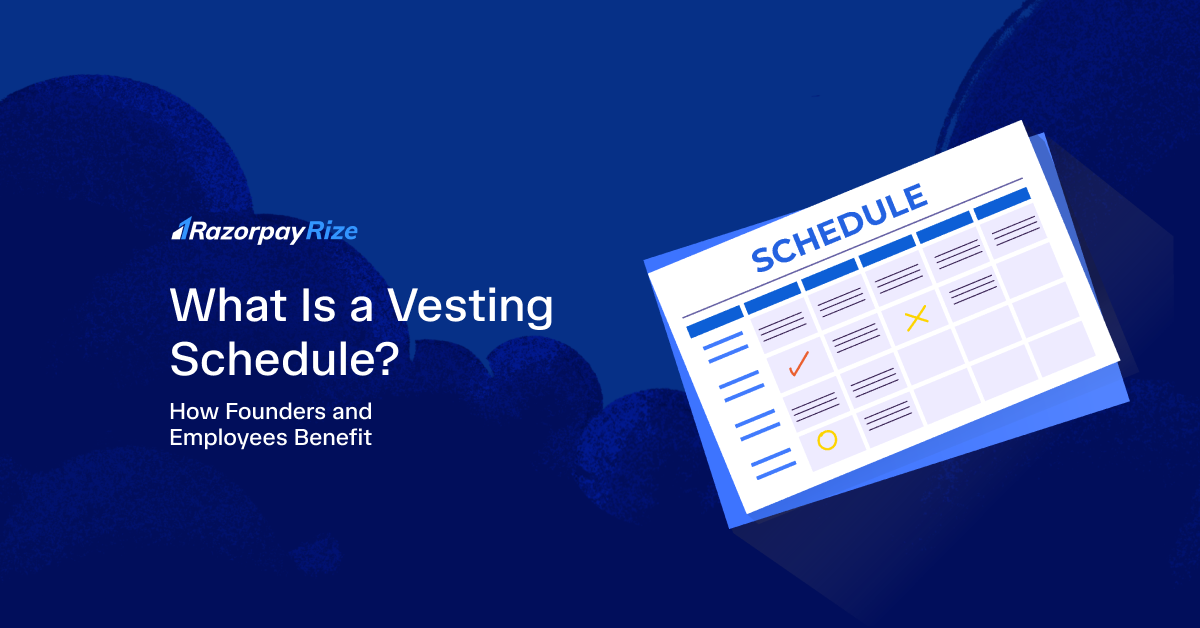
A vesting schedule determines how and when someone earns their equity over time. It protects the company, rewards commitment, and ensures that founders and employees are aligned toward long-term success.
In this blog, we break down what vesting schedules are, how they work, and why they matter for both founders and employees.
Table of Contents
What is a Vesting Schedule?
A vesting schedule is a structured timeline that determines when a founder, employee, or advisor actually earns ownership in the company.
Instead of receiving equity all at once, they earn small portions gradually, typically on a monthly or yearly basis, over a specified period (often four years). This ensures that equity is tied to contribution and long-term involvement.
In simple terms:
Vesting = earning ownership over time.
Vesting Schedule Example
Let’s take the most common structure: 4 years vesting with a 1-year cliff.
- Total equity granted: 1%
- Vesting period: 4 years
- Cliff: 12 months
- Vesting frequency after cliff: monthly
How it plays out:
- Months 0–12: You earn nothing yet (the cliff period).
- At 12 months: You vest 25% of your total equity (0.25%).
- After that: You vest a small portion every month.
- By 48 months: You vest the complete 1%.
This protects the company from giving equity to someone who leaves too early while rewarding those who stay and contribute.
How Does a Vesting Schedule Work?
Here’s how vesting runs inside most startups:
1. Cliff Period
A cliff is the minimum time someone must stay before earning any equity.
Typical cliff: 1 year.
If the person leaves before the cliff, they get zero equity.
2. Monthly or Quarterly Vesting
After the cliff, equity vests incrementally:
- Monthly vesting (most common): 1/48th per month in a 4-year schedule.
- Quarterly vesting: Equity vests every 3 months.
3. Total Vesting Duration
Standard vesting duration: 4 years, but can range from 2–5 years depending on the role and stage.
4. Calculated Based on Tenure
Equity earned = (Total grant ÷ total vesting months) × months worked after cliff
This ensures a predictable, fair method of distributing ownership.
Why Does the Vesting Schedule Matter?
Vesting schedules are essential for all parties involved in the company.
For Founders
- Prevents splitting equity with co-founders who leave early
- Protects the cap table
- Builds investor trust
For Employees
- Fairly rewards long-term contributions
- Creates alignment with company success
- Motivates performance and engagement
For Investors
- Ensures the core team stays committed
- Reduces early dilution
- De-risks the business
Types of Vesting Schedules
1. Time-Based Vesting
The most common model.
Equity vests over a set time period, like:
- 4 years with a 1-year cliff
- Monthly or quarterly vesting after the cliff
Ideal for: Employees, founders, advisors.
2. Milestone-Based Vesting
Equity vests when specific goals are achieved, such as:
- Launching a product
- Reaching revenue milestones
- Completing technical deliverables
Ideal for: Advisors, contractors, early technical hires.
3. Hybrid Vesting
A combination of time-based + milestone-based vesting.
Example:
- 50% equity vests over time
- 50% vests upon achieving key milestones
Ideal for: Senior leadership roles.
What is Accelerated Vesting?
Accelerated vesting means equity vests faster than initially planned, usually triggered by specific events.
Forms of acceleration:
- Single-trigger acceleration: Vests on acquisition.
- Double-trigger acceleration: Vests on acquisition and termination.
Acceleration protects employees and founders during major transitions while ensuring fairness in sudden organisational changes.
Frequently Asked Questions (FAQs)
Companies utilise vesting schedules to retain talent, align incentives, and safeguard their equity. Vesting ensures that founders, employees, and advisors earn ownership only after they have contributed over time, preventing early departures from walking away with significant equity.
The most common vesting schedule is 4 years with a 1-year cliff. However, depending on the role and stage of the company, vesting periods can range from 2 to 5 years.
A cliff is the minimum period someone must stay before they earn their first portion of equity. If there is a 1-year cliff, the employee or founder vests nothing for the first 12 months, and then earns 25% at once- after which vesting continues monthly or quarterly.
No. Vesting schedules apply to:
- Founders
- Employees
- Advisors
- Consultants
Any role that receives equity can have a vesting schedule attached to ensure commitment.
While vesting itself doesn’t mathematically change valuation, it positively influences investor perception, which can impact how a company is valued.

Swagatika Mohapatra is a storyteller & content strategist. She currently leads content and community at Razorpay Rize, a founder-first initiative that supports early-stage & growth-stage startups in India across tech, D2C, and global export categories.
Over the last 4+ years, she’s built a stronghold in content strategy, UX writing, and startup storytelling. At Rize, she’s the mind behind everything from founder playbooks and company registration explainers to deep-dive blogs on brand-building, metrics, and product-market fit.